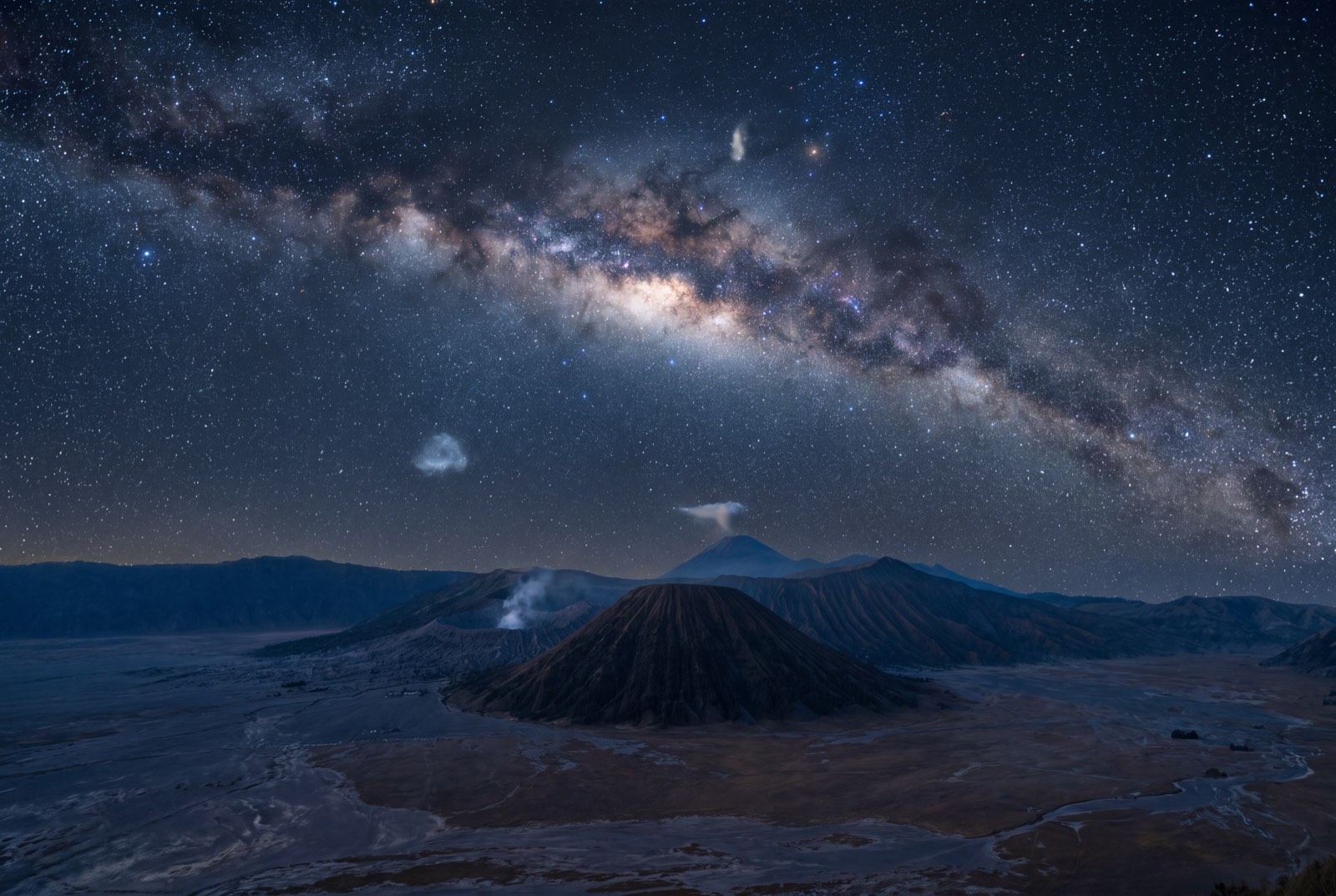
A volcano in Java, still smoking, sits under the same band of stars as everywhere else in this set.
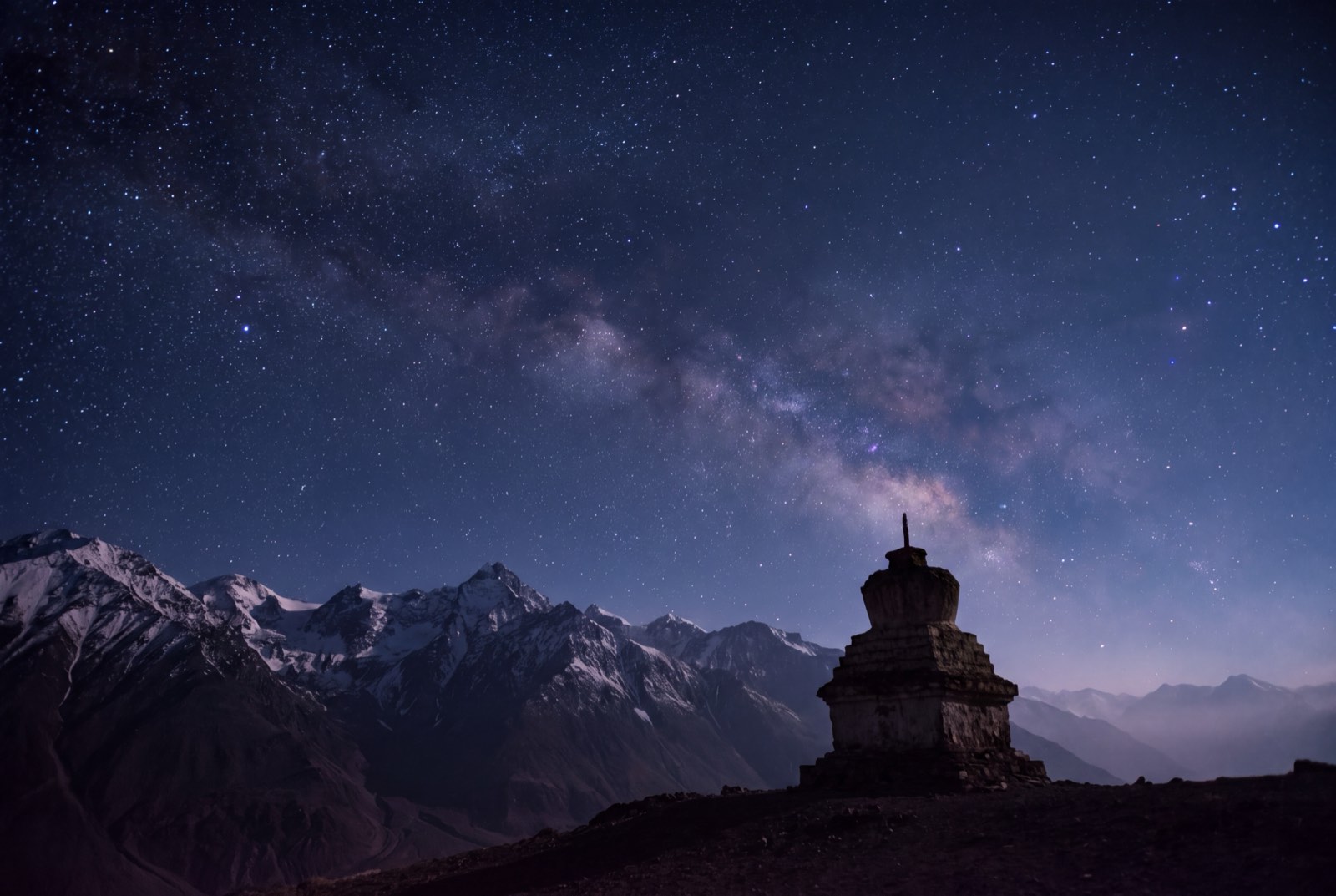
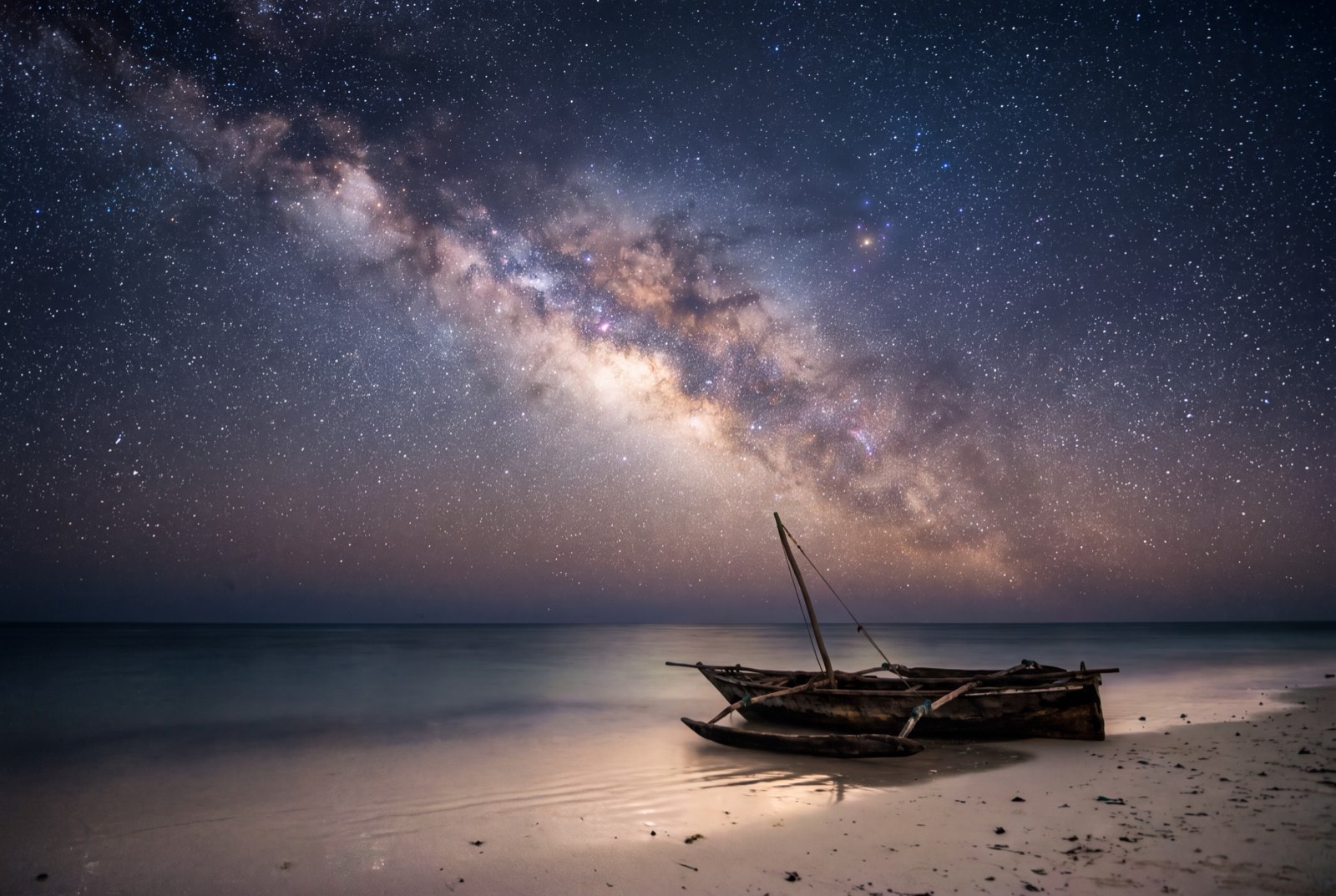
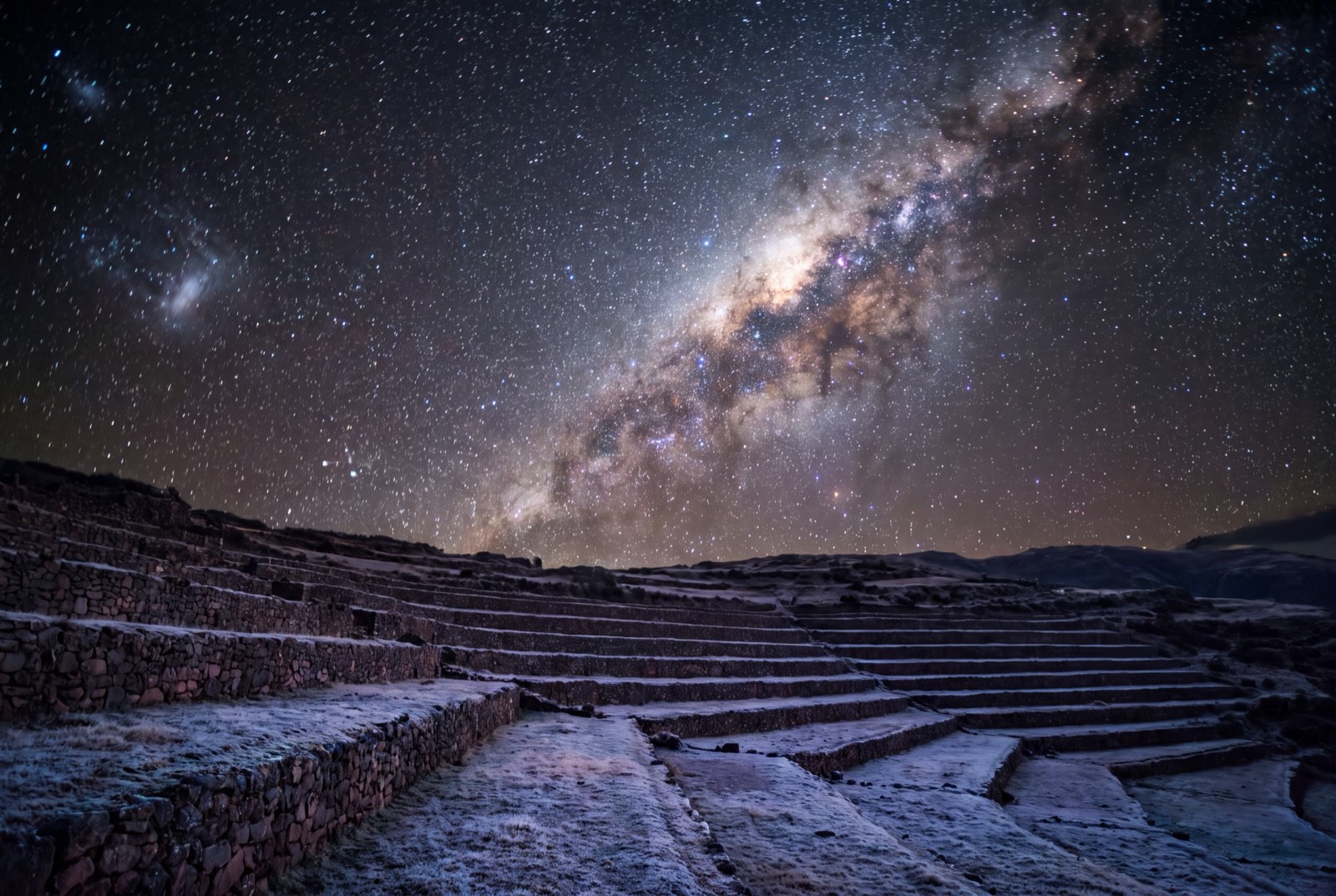
Ladakh gets it over a lone stupa. A beach in Zanzibar gets it over a wooden boat pulled up for the night. A flight of stone terraces gets it too, built long before anyone had a camera to catch it.
Four places, nothing else in common. Same Milky Way the whole time, moving the entire time. Just too slowly for anyone to actually watch it happen.
1 · Bromo Tengger Semeru, Indonesia2 · Leh, Ladakh, India3 · Zanzibar, Tanzania4 · Pampa de Occoruruyoc, Peru
Why these four skies are so dark
Bromo Tengger Semeru, Indonesia. Close to the equator, high on a volcanic caldera. Clear, dry air most of the year, and the centre of the galaxy rides higher in the sky, for longer, than it does further from the equator.
Leh, Ladakh. High-altitude desert, with almost no moisture in the air to scatter light. Ladakh is also home to Hanle, India's first official Dark Sky Reserve.
Pampa de Occoruruyoc, Peru. Southern hemisphere, high in the Andes. Thin air, the core almost directly overhead, and the Magellanic Clouds in view.
Zanzibar. The outlier: sea level, not altitude. The dark comes from geography, ocean on one side and almost nothing between you and the horizon.
Four completely different reasons. Same result. And the movement is real: the Earth turns about fifteen degrees an hour, so the band of the galaxy crosses the whole sky in a night.